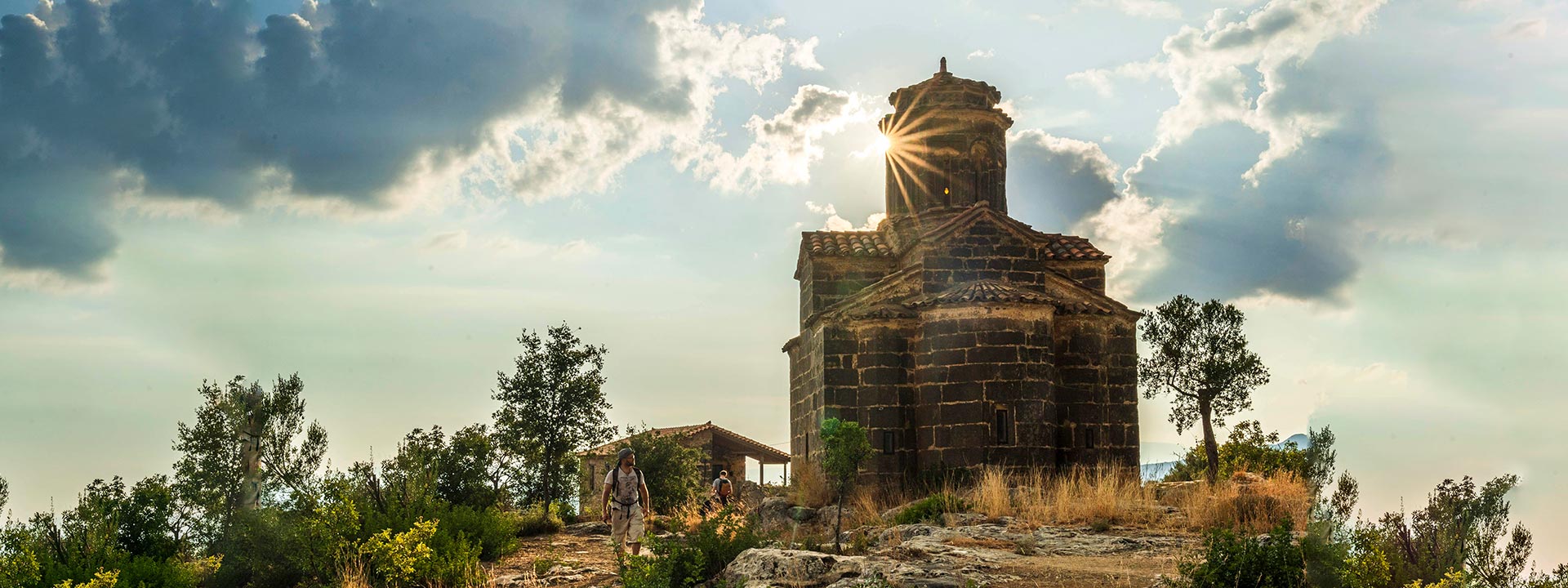
Between the mountains and the sea
The walk up to Agia Sofia, perched above Kardamili, is one of the region’s most evocative routes—an experience that blends gentle physical effort with a deep sense of cultural immersion. Beginning near the old quarter of Kardamili, the path rises steadily along centuries-old kalderimi, where smooth, time-worn stones guide travellers upward through a landscape rich in texture and history. Olive groves, dry-stone terraces, and scattered Byzantine chapels create an atmosphere that feels suspended between past and present, making the ascent as meditative as it is scenic.
As the trail climbs, panoramic views unfold in a way that feels almost theatrical. Behind you, the Messinian Gulf stretches out in shifting shades of blue, while ahead the slopes of the Taygetos mountains rise in sculpted layers of limestone and pine. The higher you go, the more the landscape reveals—clusters of stone houses in old Kardamili, the rugged coastline curving south toward Mani’s interior, and the rhythmic pattern of olive trees cascading toward the sea. It’s a route that encourages pauses: moments to stand, breathe, and simply take in the interplay of light, land, and water.
Reaching Agia Sofia, a beautifully preserved Byzantine church overlooking the valley, feels like stepping into a sanctuary shaped by nature and devotion alike. Its quiet courtyard, faded frescoes, and commanding views make it a destination that rewards both cultural curiosity and a love of walking. The atmosphere here is one of serene elevation—spiritual in the broadest sense, offering a place to rest in the shade and absorb the grandeur of the surroundings. For cultured travellers and thoughtful trekkers, the walk to Agia Sofia is both a journey and a gentle revelation of what makes the Kardamili landscape so profoundly moving.